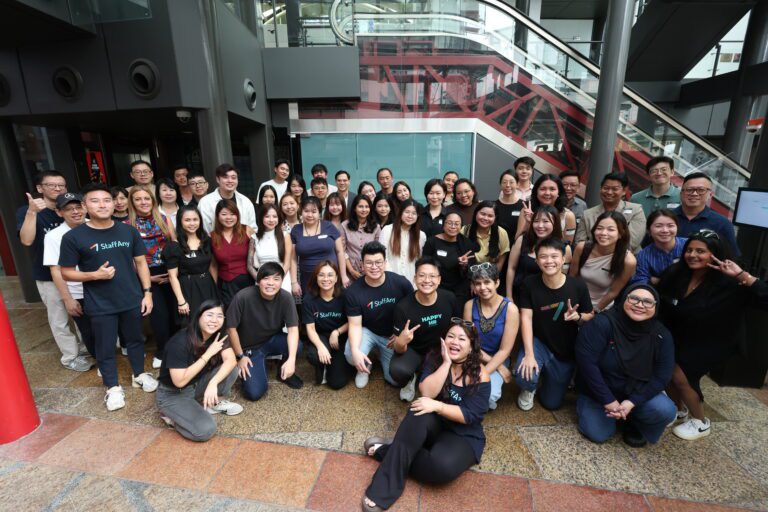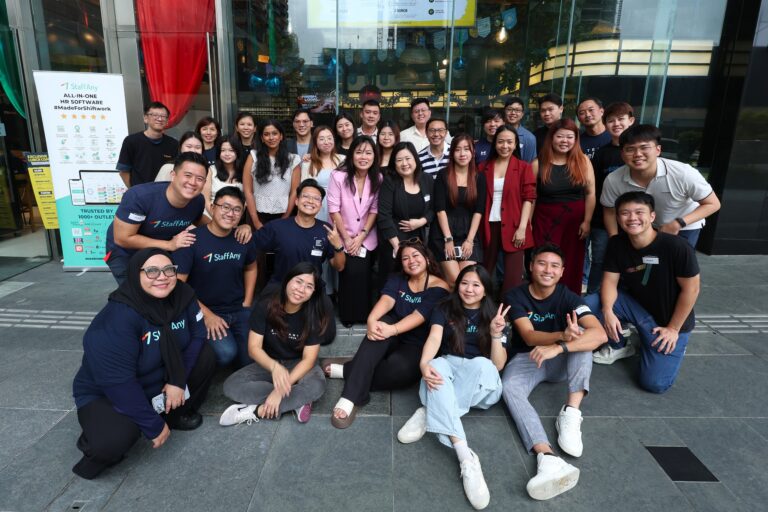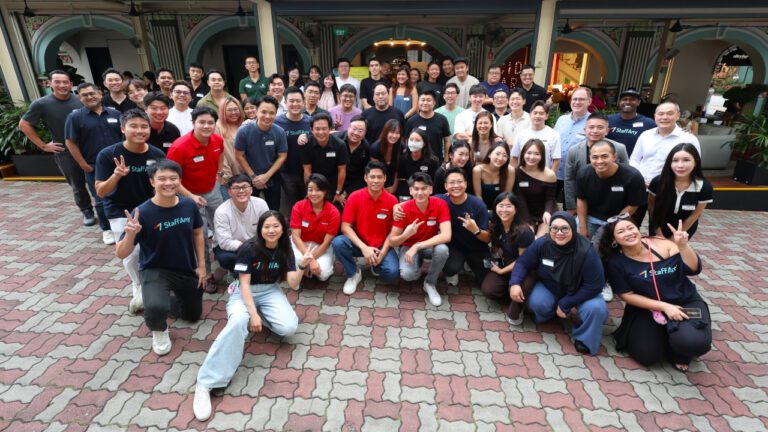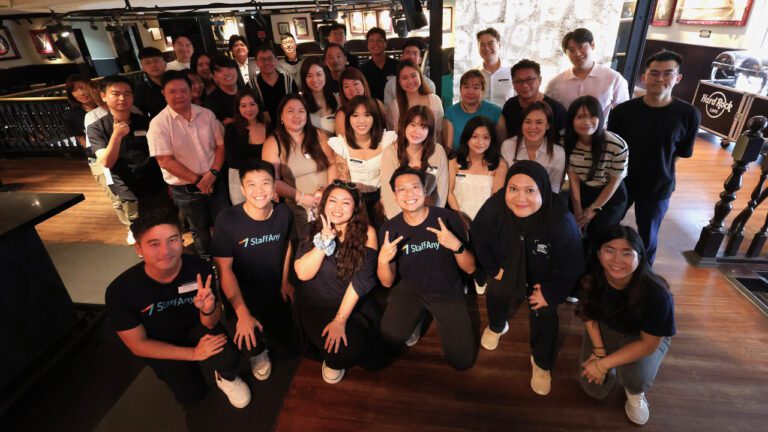
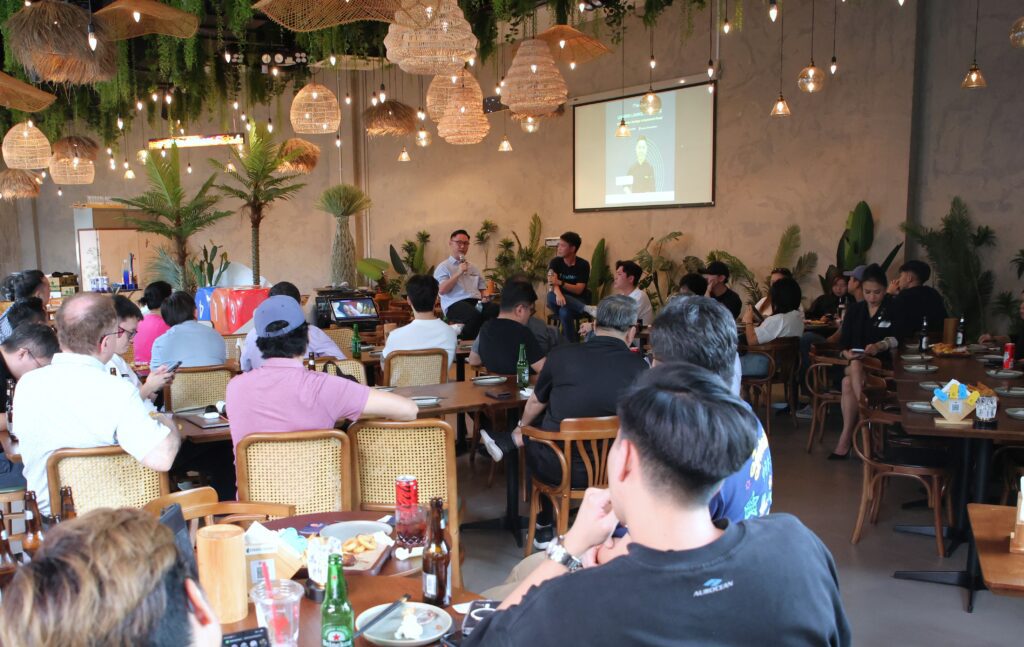
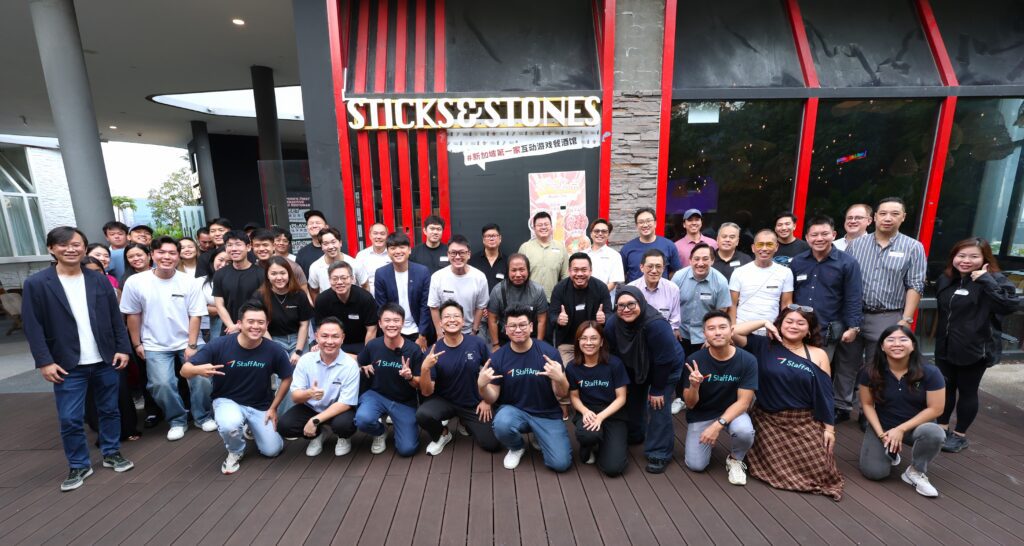
On 16 July 2026, F&B owners and operators from across Singapore gathered at Sticks & Stones, Bugis+, for another edition of StaffAny’s Leaders Lounge.
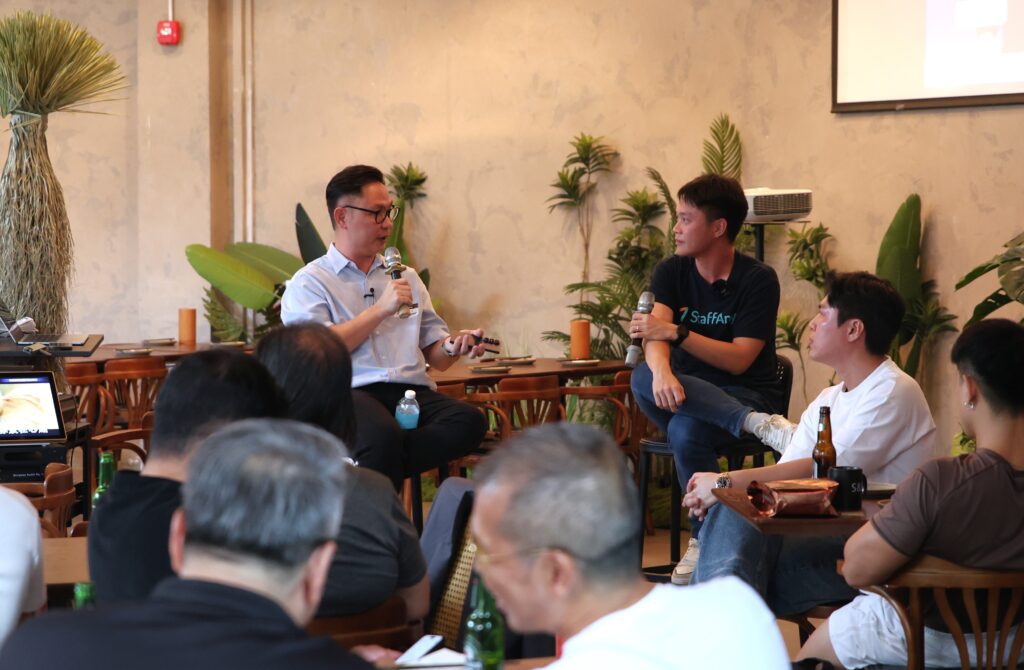
The session featured Victor Tay, CEO of White Restaurant, who shared how his family business grew from a humble hawker stall into a recognised restaurant brand with nine outlets and approximately 200 employees.
During the fireside chat, Victor spoke candidly about joining the family business, transitioning from a coffee shop model to restaurants, managing rising labour and rental costs, and preserving the warmth of a heritage brand while building systems for growth.
Here are the key takeaways from the session.
Operating in an Uncertain Environment
One of the main themes of the discussion was the level of uncertainty in today’s market.
Rising costs, supply volatility, and changing customer sentiment have made planning more difficult for operators. Businesses are seeing fluctuations in both supplier pricing and consumer demand, which creates pressure on both revenue and cost management.
For companies with fixed commitments such as property investments, this uncertainty adds an additional layer of pressure to maintain consistent performance and meet baseline financial obligations.
As a result, agility has become an essential capability. Operators need to constantly review their position and make adjustments as conditions change.
Diversification as a Survival Strategy
Both speakers shared the importance of diversifying revenue streams.
Relying too heavily on a single segment, particularly government contracts, can expose businesses to significant risk. In earlier years, some catering businesses derived the majority of their revenue from a single contract. While this provided stability in the short term, it created vulnerability if the contract was lost.
Over time, businesses such as food caterers shifted towards a more balanced mix of B2B, B2C, and institutional contracts with some specialised brands built to target different niches. This allowed them to spread risk and build resilience across different customer segments.
Diversification was not positioned as a growth strategy alone, but as a necessary move to ensure long term sustainability.
Growth Requires Multiple Levers
The session also highlighted that improving revenue is rarely driven by a single action.
Operators shared that meaningful growth typically comes from a combination of initiatives, including strengthening brand positioning, developing new products, building partnerships, and improving sales strategies. These are medium to long term efforts rather than immediate fixes.
Short term actions such as price increases may provide temporary relief, but they need to be managed carefully to avoid longer term impact on customer demand.
Growth Often Begins with Listening to Customers
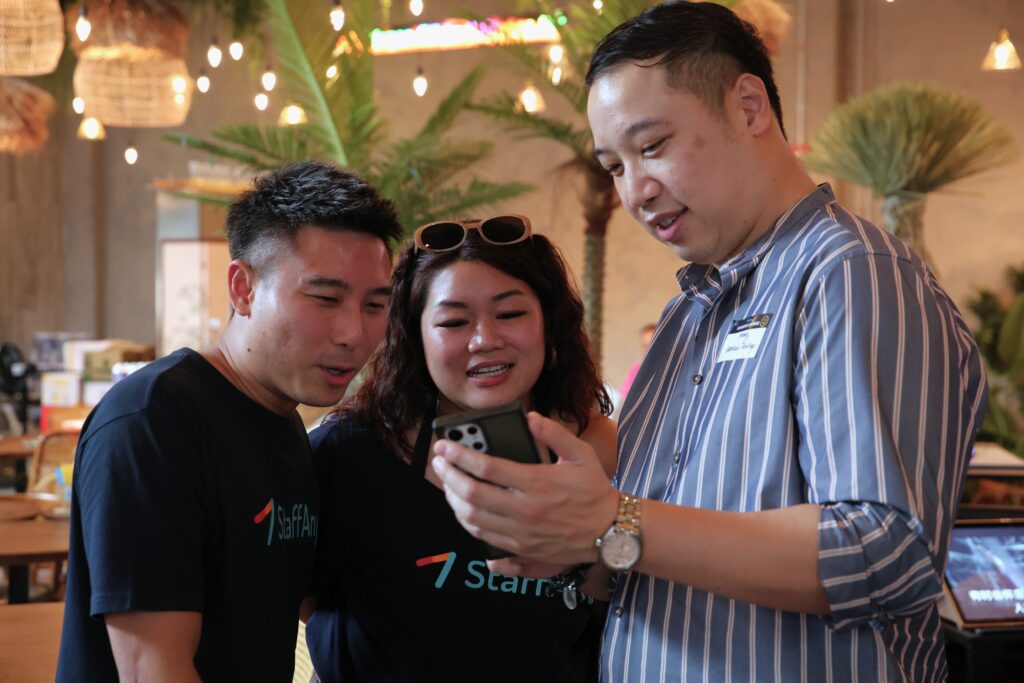
White Restaurant’s journey began in Sembawang, where Victor’s parents operated a hawker stall before moving into a coffee shop in 1999.
For many years, customers travelled back to Sembawang to enjoy the brand’s signature white beehoon. As some of these customers moved to newer neighbourhoods, they began asking whether White Restaurant would consider opening closer to them.
That demand contributed to the opening of the brand’s first restaurant outlet at Punggol Settlement in 2015.
The decision was not based on extensive market research or a complex expansion strategy. It came from listening to long-time customers and responding to a clear opportunity.
Following the positive reception in Punggol, landlords began approaching White Restaurant with opportunities to enter shopping malls. From there, the business continued expanding gradually, initially opening around one restaurant each year.
The lesson for F&B operators is that useful market signals do not always come from formal reports. Customer behaviour, repeated requests, and changes in where customers live can also reveal where demand exists.
Moving from a Coffee Shop to a Restaurant Changes Customer Expectations
The transition from a coffee shop to a restaurant involves more than changing the location.
According to Victor, one of the biggest differences is the customer’s expectation. Customers dining in a shopping mall generally expect a more comfortable environment, better service, and a different overall experience from what they would expect at a coffee shop.
White Restaurant therefore had to improve its ambience and service standards while preserving the welcoming experience that customers associated with the original business.
This transition also came with significantly higher operating costs. Victor shared that rental for a shopping mall restaurant could be approximately three times that of the coffee shop, while manpower requirements were also higher.
For an F&B brand considering a similar move, the decision should account for the complete operating model, including:
- Rental and capital expenditure
- Manpower requirements
- Service expectations
- Outlet design and ambience
- Kitchen capacity
- Customer accessibility
- Delivery coverage
- The ability to maintain food quality
A restaurant may generate more revenue than a hawker or coffee shop location, but it also carries higher financial and operational expectations.
What Works at One Outlet May Break at Five
In the early stages of expansion, White Restaurant focused primarily on opening outlets and getting them operational.
However, by the fourth or fifth outlet, the team began recognising that the methods used in the original outlet could not simply be replicated through personal supervision.
As Victor explained, founders and family members often carry a level of emotional investment and experience that cannot automatically be expected from every employee.
This made standard operating procedures, training, and process improvement essential.
The business began placing greater emphasis on:
- Documenting operational procedures
- Creating greater clarity for employees
- Improving kitchen efficiency
- Standardising service
- Training outlet managers
- Reducing the need for employees to guess
- Maintaining consistency across locations
White Restaurant now has operations managers, a training manager, and an executive chef involved in reviewing and improving its processes. Victor also remains closely involved in operations and regularly discusses how procedures can be made clearer and more efficient.
For businesses scaling an F&B operation, systems should ideally be developed before inconsistency becomes a serious problem. If quality depends entirely on the founder being physically present, the business is not yet ready to scale reliably.
Scaling from Five to Ten Outlets Creates a People Challenge
As the number of outlets increases, maintaining company culture becomes more difficult.
At five outlets, business owners may still know most employees and visit each location frequently. At ten outlets and approximately 200 employees, direct interaction becomes harder to sustain.
Victor identified people management and culture as major differences between operating five outlets and operating close to ten.
Despite the company’s growth, he continues visiting outlets several times a week. These visits allow him to speak with managers and employees, observe operations, and hear feedback from customers.
This direct involvement helps leadership understand whether company values and service standards are genuinely being practised, rather than relying only on reports.
However, founder involvement alone is not enough. Growing F&B businesses also need capable managers who can reinforce expectations consistently when senior leaders are not present.
Technology Can Help Control F&B Labour Costs
Labour costs remain one of the largest expenses for restaurant operators.
During the discussion, Victor shared that labour cost was approximately 22 percent at White Restaurant’s coffee shop and around 37 percent across its restaurant operations. These figures illustrate how service expectations and operating formats can significantly affect manpower requirements.
To improve efficiency, White Restaurant has introduced technology such as QR ordering and food-serving robots. These tools reduce some manual work and allow employees to focus on other areas of service.
Technology may not transform the entire cost structure through one major change. However, several smaller improvements can add up.
F&B operators can explore areas such as:
- Digital ordering
- Automated attendance tracking
- Smarter staff scheduling
- Kitchen process improvements
- Self-service options
- Cross-training employees
- Better demand forecasting
- Automated payroll calculations
The objective should not be to remove employees without considering the effect on customers. It should be to reduce repetitive work and deploy employees where human interaction creates the most value.
Expansion Requires More Than Finding an Available Unit
When evaluating potential restaurant locations, White Restaurant considers several factors beyond whether the unit is available.
One important consideration is cannibalisation. Delivery contributes a significant portion of the brand’s sales, so opening outlets too close together could create overlapping delivery areas without generating enough additional demand.
Other considerations include:
- Rental costs
- The location of the unit within the mall
- Overall foot traffic
- Accessibility and parking
- Proximity to existing outlets
- Delivery radius
- The suitability of the surrounding customer base
Victor also emphasised the importance of visiting the location personally. Walking the ground and observing how people move through the area can provide insights that may not be visible in a leasing proposal.
Accessibility can be particularly important for destination outlets. Victor shared that the removal of nearby parking spaces affected traffic to White Restaurant’s original location, demonstrating how external infrastructure changes can influence an outlet’s performance.
A Heritage Brand Must Preserve More Than Its Food
Maintaining a heritage brand requires consistency in both its food and the way customers are treated.
White Restaurant built its following not only through its signature white beehoon, but also through the warm and familiar service customers experienced at its original location.
As the company expanded, this warmth needed to be translated into a restaurant setting and taught to a much larger team.
Victor emphasised that customer service is not only about the words an employee uses. Tone, attitude, and delivery can completely change how those words are received.
This is why White Restaurant invests time in helping managers and employees understand how they should communicate and behave with customers.
SOPs can define the required service steps, but culture determines how those steps feel. Heritage brands need both if they want to preserve authenticity while expanding.
Traditional Brands Still Need to Stay Relevant
Preserving heritage does not mean keeping everything unchanged.
White Restaurant regularly introduces new dishes and seasonal offerings to give customers fresh reasons to engage with the brand. These dishes often build on familiar flavours while giving them a more contemporary twist.
One example was the introduction of mala white beehoon as a limited-time National Day dish, using red and white to reflect Singapore’s national colours. After strong customer demand, the dish was eventually added to the regular menu.
Seasonal launches allow established F&B brands to:
- Generate new conversations
- Encourage repeat visits
- Participate in current trends
- Test new menu ideas
- Attract younger audiences
- Remain relevant without abandoning their identity
The key is to innovate around the brand’s core strengths rather than following trends that do not fit its positioning.
Second-Generation Leadership Requires Mutual Trust
The session also explored the transition between the first and second generations of a family business.
Victor began helping at the business during his polytechnic years, initially taking on practical tasks such as clearing tables, washing dishes, cleaning, and supporting kitchen operations. White Restaurant eventually became his first full-time job.
Rather than placing pressure on him to continue the business in a particular way, Victor’s parents gave him room to make decisions. Their willingness to support expansion enabled the company to grow beyond the single coffee shop they had originally intended to operate.
Not every family business experiences such a smooth transition. Differences in risk appetite, working styles, and expectations can create tension between generations.
White Restaurant’s experience demonstrates the value of combining the first generation’s operational knowledge with the next generation’s ambition to build new systems, formats, and growth opportunities.
Building an F&B Business That Can Grow Without Losing Its Roots
White Restaurant’s journey demonstrates that scaling an F&B business is not simply about opening more outlets.
Sustainable growth requires stronger systems, clearer standards, capable managers, disciplined location selection, and a consistent customer experience. It also requires leaders to recognise when the informal methods that worked in the first outlet are no longer sufficient.
Following the fireside chat, attendees continued exchanging experiences and building connections with fellow F&B owners and operators.
StaffAny’s Leaders Lounge provides a space for industry leaders to discuss practical business challenges, learn from one another, and strengthen Singapore’s F&B community.
We look forward to welcoming everyone at the next Leaders Lounge.